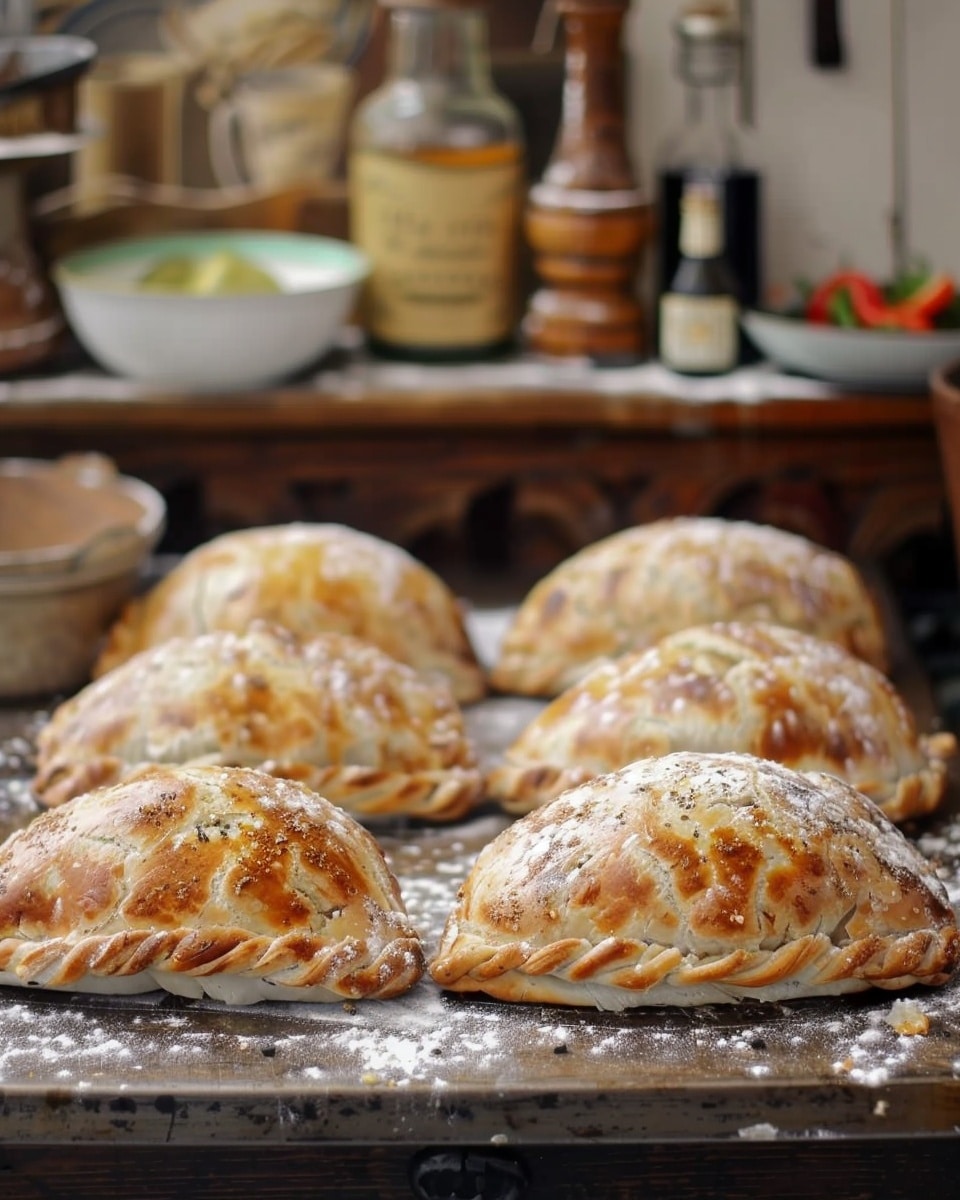
These traditional homemade empanadas feature a simple, time-honored dough made with wheat flour, warm water, lard, and salt. Passed down through generations, this recipe creates soft yet sturdy pastry rounds that are perfect for filling with your favorite savory or sweet mixtures. Whether baked or fried, these empanadas deliver authentic flavor and comforting homemade goodness.
Why You’ll Love This Recipe
This recipe stays true to the classic way grandmothers prepared empanada dough: simple ingredients, careful mixing, and just the right resting time. The dough is easy to work with, rolls out beautifully, and creates empanadas that are tender on the inside with a lightly crisp exterior when cooked.
You’ll love this recipe because:
It uses only four basic pantry ingredients
The dough is soft, elastic, and easy to shape
It works well for baking or frying
It can be used with countless filling variations
It preserves authentic, traditional flavor
Ingredients
(Tip: You’ll find the full list of ingredients and measurements in the recipe card below.)
500 g wheat flour (all-purpose flour works best)
280 g lukewarm water (about 38–40°C)
100 g lard, softened (or unsalted butter as a substitute)
10 g salt
Directions
In a large mixing bowl, combine the 500 g wheat flour and 10 g salt. Stir evenly to distribute the salt throughout the flour.
Add the 100 g softened lard to the flour mixture. Using your fingertips, rub the lard into the flour until the texture becomes sandy and crumbly.
Gradually pour in the 280 g lukewarm water while mixing with your hand or a wooden spoon. Add the water slowly to control the consistency.
Mix until the dough begins to come together, then transfer it onto a lightly floured surface.
Knead the dough for 8–10 minutes until it becomes smooth, soft, and elastic. It should not feel sticky. If needed, sprinkle a small amount of flour during kneading.
Shape the dough into a ball and cover it with a clean kitchen towel or plastic wrap.
Let the dough rest at room temperature for 30–40 minutes. This step is essential for relaxing the gluten and making rolling easier.
After resting, divide the dough into equal portions (about 50–60 g each for medium empanadas).
Roll each portion into a ball, then flatten and roll into circles approximately 12–14 cm in diameter.
Add your desired filling in the center, fold over, and seal the edges by pressing firmly and crimping.
Bake at 180°C for 20–25 minutes until lightly golden, or fry in hot oil at 170–175°C for 3–4 minutes per side until golden brown.
Servings and timing
Servings: Makes approximately 16–18 medium empanadas
Preparation time: 20 minutes
Resting time: 30–40 minutes
Cooking time: 20–25 minutes (baking) or 6–8 minutes total (frying)
Total time: About 1 hour 15 minutes
Variations
Butter version: Replace the 100 g lard with 100 g unsalted butter for a slightly milder flavor.
Whole wheat option: Substitute 150 g of the white flour with whole wheat flour for a more rustic texture.
Sweet fillings: Sweetened pumpkin, fruit preserves, or dulce de leche.
Spiced dough: Add a pinch of paprika or turmeric to the flour for subtle color and flavor.
Storage/Reheating
Storage:
Store uncooked dough wrapped tightly in plastic wrap in the refrigerator for up to 2 days.
Baked empanadas can be stored in an airtight container in the refrigerator for up to 4 days.
Freezing:
You can freeze shaped, uncooked empanadas on a tray until solid, then transfer to a freezer-safe bag for up to 2 months.
Reheating:
Reheat baked empanadas in a preheated oven at 170°C for 8–10 minutes until warmed through. Avoid microwaving if you want to maintain a crisp texture.
FAQs
Can I use butter instead of lard?
Yes, you can substitute the same amount of unsalted butter. The texture will be slightly different but still delicious.
Why is lukewarm water important?
Lukewarm water helps the fat incorporate smoothly and creates a more pliable dough.
What type of flour works best?
All-purpose flour is ideal for balanced texture and elasticity.
Why does the dough need to rest?
Resting relaxes the gluten, making the dough easier to roll and preventing shrinkage.
Can I make the dough ahead of time?
Yes, it can be refrigerated for up to 48 hours before use.
How thin should I roll the dough?
Roll to about 2–3 mm thickness for the best balance between tenderness and structure.
Can I freeze the dough?
Yes, wrap it tightly and freeze for up to 2 months. Thaw overnight in the refrigerator before using.
Why are my empanadas cracking?
The dough may be too dry. Add a small amount of water while kneading next time.
How do I prevent the filling from leaking?
Do not overfill, and seal the edges firmly by pressing and crimping well.
Are these better baked or fried?
Both methods work well. Baking gives a lighter texture, while frying creates a crisp, golden crust.
Conclusion
Grandma’s homemade empanadas are a timeless recipe built on simplicity and tradition. With just flour, water, lard, and salt, you can create a versatile dough that works for countless fillings and occasions. Whether baked or fried, these empanadas bring warmth, flavor, and cherished memories to every table.
Grandma’s Homemade Empanadas are made with a traditional four-ingredient dough of flour, lukewarm water, lard, and salt. This simple, time-honored recipe creates soft, elastic pastry rounds that bake or fry beautifully, delivering authentic flavor and comforting homemade goodness.
Ingredients
500 g all-purpose wheat flour
280 g lukewarm water (38–40°C)
100 g lard, softened (or unsalted butter as substitute)
10 g salt
Instructions
In a large bowl, combine flour and salt and mix evenly.
Add softened lard and rub into the flour using fingertips until the mixture becomes sandy and crumbly.
Gradually pour in lukewarm water while mixing until the dough begins to come together.
Transfer to a lightly floured surface and knead for 8–10 minutes until smooth and elastic.
Shape into a ball, cover, and let rest at room temperature for 30–40 minutes.
Divide dough into 16–18 equal portions (about 50–60 g each).
Roll each portion into a circle 12–14 cm in diameter and about 2–3 mm thick.
Add desired filling to the center, fold over, and seal edges firmly by pressing and crimping.
Bake at 180°C for 20–25 minutes until lightly golden, or fry at 170–175°C for 3–4 minutes per side until golden brown.
Notes
Resting the dough relaxes gluten and prevents shrinkage.
Do not overfill to avoid leaks.
Lukewarm water improves dough elasticity.
Baking produces a lighter texture; frying creates a crispier crust.
Dough can be refrigerated up to 48 hours before use.