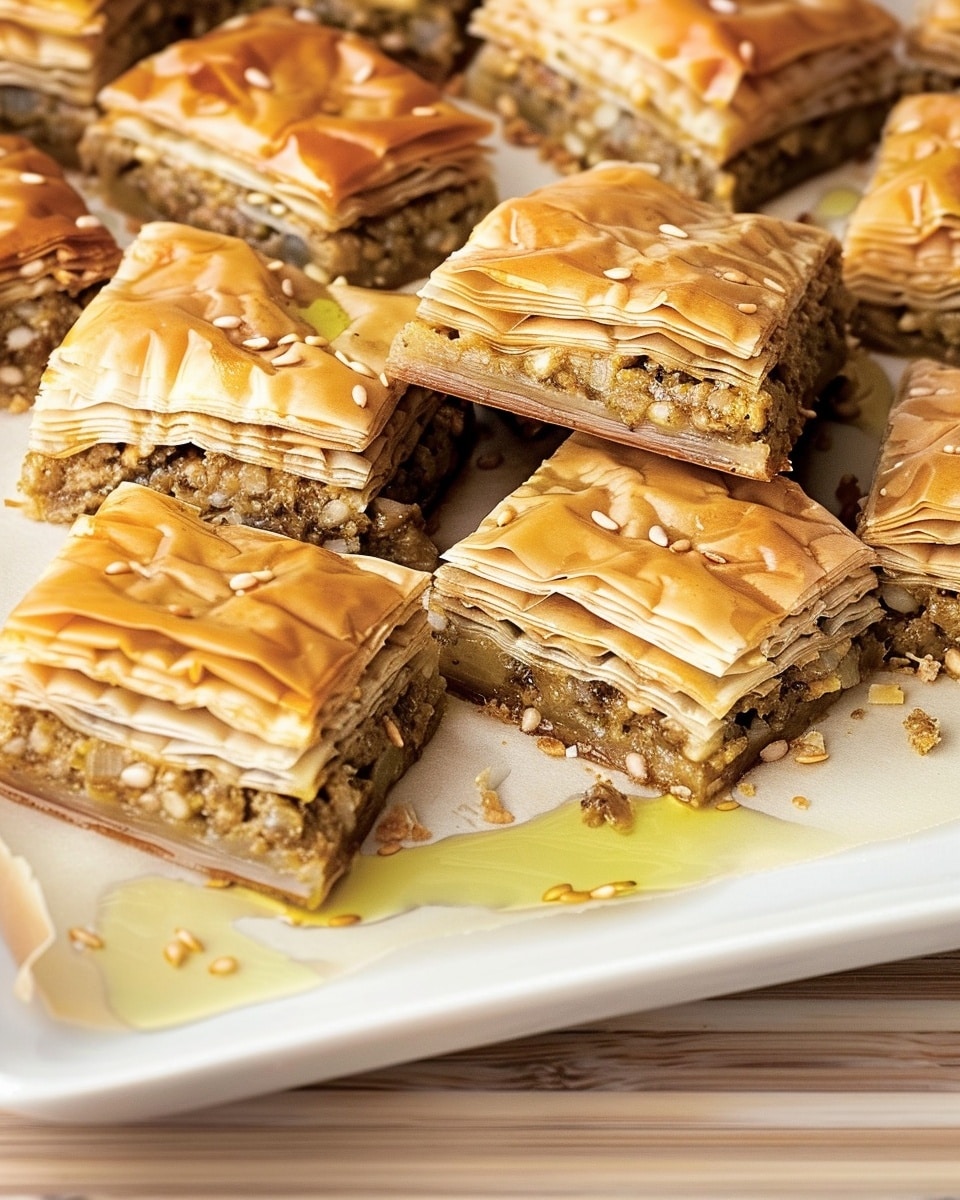
This classic Greek baklava is a rich, flaky dessert made with delicate layers of phyllo dough, buttery walnuts, warm cinnamon, and a luscious honey syrup. Each bite delivers a perfect balance of crisp texture and sweet, aromatic flavor that makes it unforgettable.
Why You’ll Love This Recipe
This baklava is surprisingly simple to prepare despite its elegant appearance. The layering process is straightforward, and the result is a bakery-quality dessert made right at home. It’s perfect for holidays, gatherings, or whenever you want something special. The combination of crunchy nuts, buttery pastry, and fragrant syrup creates a dessert that stays fresh for days and tastes even better over time.
Ingredients
(Tip: You’ll find the full list of ingredients and measurements in the recipe card below.)
Syrup:
1 cup granulated sugar
¾ cup water
½ cup honey
2 tablespoons lemon juice
Directions
Start by thawing the phyllo dough overnight in the refrigerator. Before using, let it sit at room temperature for about one hour without opening the package.
Prepare the syrup first so it has time to cool. In a saucepan, combine sugar, water, honey, and lemon juice. Bring to a boil while stirring until the sugar dissolves. Reduce the heat and let it simmer for about 4 minutes without stirring. Remove from heat and allow it to cool completely.
Preheat the oven to 325°F (160°C). Butter a 9×13-inch baking dish. Chop the walnuts finely and mix them with the cinnamon.
Layer 10 sheets of phyllo dough in the bottom of the dish, brushing each sheet with melted butter before adding the next. Spread about ¾ cup of the walnut mixture evenly over the layers.
Add 5 more sheets of buttered phyllo dough, then another layer of walnuts. Repeat this process four times.
Finish with a top layer of 6 to 10 sheets of phyllo dough, brushing each with butter, including the final top layer.
Using a sharp knife, cut the baklava into diamond shapes or squares before baking.
Bake for 1 hour and 15 minutes, until golden brown. Remove from the oven and immediately pour the cooled syrup evenly over the hot baklava.
Allow the baklava to cool uncovered at room temperature for 4 to 6 hours so it can fully absorb the syrup before serving.
You can easily customize baklava to suit your taste. Replace walnuts with pistachios, almonds, or a mix of nuts for a different flavor profile. Add spices like cloves or cardamom for a more aromatic filling. A splash of orange blossom water or rose water in the syrup can give it a floral twist. You can also experiment with different shapes such as triangles or rolled pastries instead of the traditional diamond cut.
Storage/Reheating
Store baklava at room temperature, lightly covered with a clean cloth, for up to 1 to 2 weeks. Avoid sealing it completely, as this can make it soggy.
For longer storage, freeze portions in airtight containers for up to 4 months. Thaw at room temperature before serving.
Reheating is not necessary, as baklava is best enjoyed at room temperature, but you can warm it slightly in a low oven if desired.
FAQs
What makes Greek baklava different from other types?
Greek baklava typically uses walnuts and honey syrup, giving it a rich and slightly floral sweetness compared to other versions.
Can I use unsalted butter instead of salted?
Yes, unsalted butter works just fine and allows you to control the salt level more precisely.
Why is my baklava soggy?
This usually happens if the syrup is not cooled before pouring or if the pastry wasn’t baked long enough.
Can I prepare baklava in advance?
Yes, it’s actually better when made ahead since it needs time to absorb the syrup fully.
How do I keep phyllo dough from drying out?
Keep it covered with a slightly damp cloth while working to prevent it from cracking.
Can I use different nuts?
Absolutely, pistachios, almonds, or mixed nuts all work well.
Do I have to cut it before baking?
Yes, cutting before baking ensures clean slices and helps the syrup soak evenly.
How long should baklava rest before serving?
Let it rest for at least 4 to 6 hours so the syrup is fully absorbed.
Can I reduce the sweetness?
You can slightly reduce the sugar in the syrup, but baklava is traditionally a sweet dessert.
What’s the best way to serve baklava?
Serve it at room temperature with tea or coffee for the best experience.
Conclusion
Authentic Greek baklava is a timeless dessert that combines simple ingredients into something truly special. With its crisp layers, nutty filling, and sweet syrup, it’s a treat that impresses every time. Once you try making it yourself, it quickly becomes a favorite recipe to share with family and friends.
A traditional Greek dessert made with crisp layers of buttery phyllo dough, finely chopped walnuts, warm cinnamon, and a fragrant honey syrup that creates a rich, sweet, and flaky treat.
Ingredients
16 ounces phyllo dough, thawed
1 1/4 cups salted butter, melted
1 lb finely chopped walnuts (about 4 cups)
1 teaspoon ground cinnamon
1 cup granulated sugar
3/4 cup water
1/2 cup honey
2 tablespoons lemon juice
Instructions
Thaw phyllo dough overnight in the refrigerator, then let it sit at room temperature for 1 hour before use.
Prepare the syrup by combining sugar, water, honey, and lemon juice in a saucepan. Bring to a boil while stirring until sugar dissolves, then simmer for 4 minutes. Remove from heat and cool completely.
Preheat oven to 160°C (325°F) and butter a 9×13-inch baking dish.
Mix finely chopped walnuts with cinnamon in a bowl.
Layer 10 sheets of phyllo dough in the dish, brushing each sheet with melted butter.
Spread about 3/4 cup of walnut mixture evenly over the layers.
Add 5 buttered phyllo sheets, then another layer of walnuts. Repeat this process four times.
Finish with 6–10 sheets of buttered phyllo dough on top.
Cut into diamond or square shapes using a sharp knife.
Bake for 1 hour 15 minutes until golden brown.
Immediately pour cooled syrup over the hot baklava.
Let it rest uncovered for 4–6 hours before serving.
Notes
Keep phyllo dough covered with a damp cloth to prevent drying.
Ensure syrup is cooled before pouring to avoid sogginess.
Baklava tastes better the next day as flavors develop.
Use pistachios or almonds for variation.
Add cloves or cardamom for extra aroma.
Store lightly covered at room temperature for up to 2 weeks.