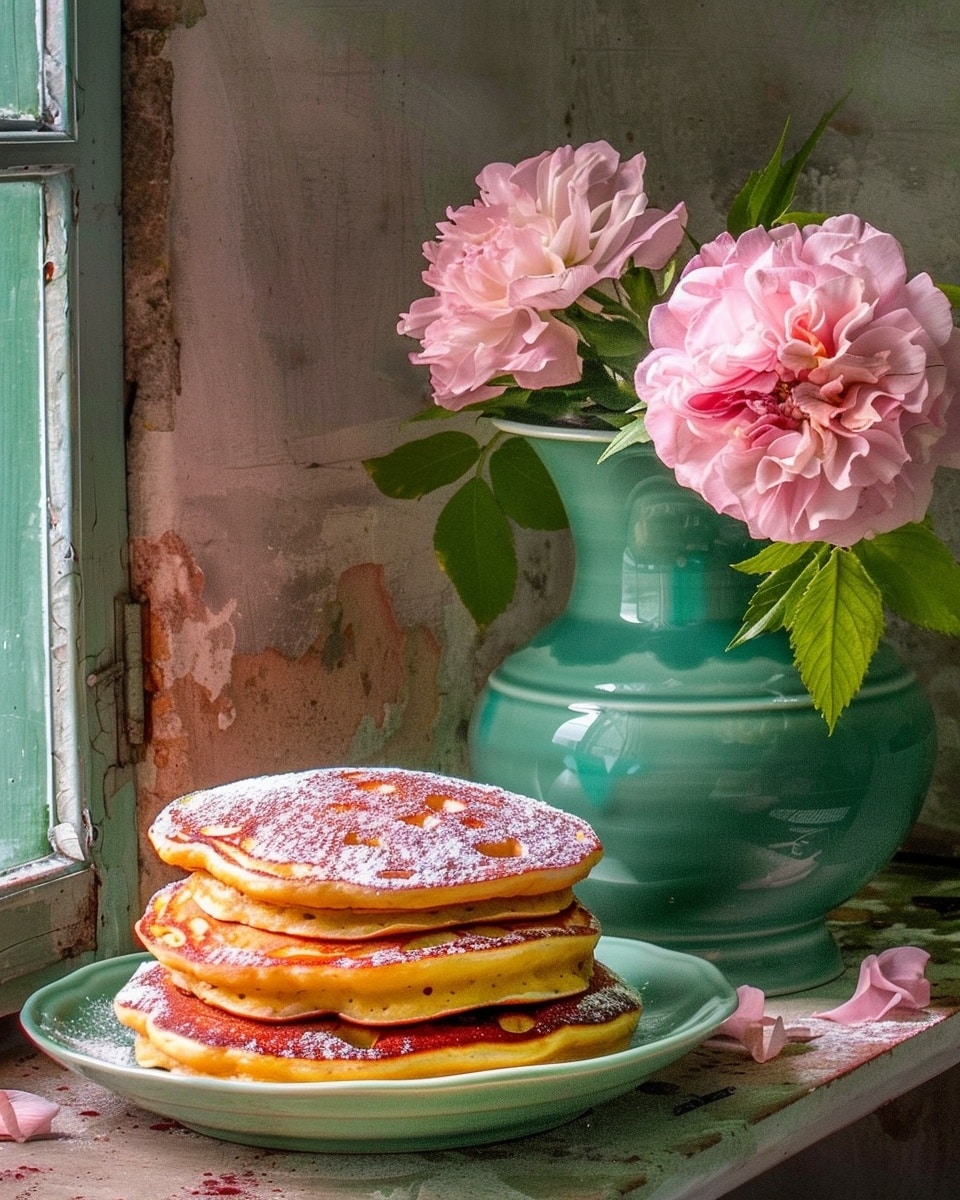
There’s a simple technique that transforms ordinary pancake batter into incredibly soft, tall, and tender pancakes—without adding a single extra ingredient. The secret? Letting the batter rest before cooking. This small step allows the flour to fully hydrate and the leavening agents to activate, creating pancakes that are noticeably thicker and fluffier every time.
Why You’ll Love This Recipe
Uses simple pantry ingredients you already have
No special tools or fancy add-ins required
Creates soft, airy, bakery-style pancakes
Easy enough for beginners
Perfect for weekend breakfasts or special brunches
The resting technique works with almost any pancake recipe
Ingredients
(Tip: You’ll find the full list of ingredients and measurements in the recipe card below.)
1 ½ cups all-purpose flour
3 ½ teaspoons baking powder
1 tablespoon granulated sugar
½ teaspoon salt
1 ¼ cups whole milk, room temperature
1 large egg, room temperature
3 tablespoons unsalted butter, melted and slightly cooled
1 teaspoon pure vanilla extract
Directions
In a large mixing bowl, whisk together the flour, baking powder, sugar, and salt until evenly combined.
In a separate bowl, whisk the milk, egg, melted butter, and vanilla extract until smooth.
Pour the wet ingredients into the dry ingredients. Gently stir with a spatula or whisk just until combined. Do not overmix. A few small lumps are perfectly fine.
Let the batter rest at room temperature for 10 minutes. This step is essential. During this time, the flour absorbs the liquid and the baking powder begins to activate, resulting in thicker and fluffier pancakes.
Heat a nonstick skillet or griddle over medium heat. Lightly grease with butter or oil.
Pour about ¼ cup of batter onto the hot skillet for each pancake.
Cook for 2–3 minutes, or until bubbles form on the surface and the edges look set. Flip and cook for another 1–2 minutes until golden brown and cooked through.
For buttermilk pancakes, replace the milk with 1 ¼ cups buttermilk and reduce the baking powder to 2 teaspoons, adding ½ teaspoon baking soda.
For extra richness, substitute half of the milk with heavy cream.
For whole wheat pancakes, replace ½ cup of the all-purpose flour with whole wheat flour.
For blueberry pancakes, gently fold in ¾ cup fresh or frozen blueberries after the batter has rested.
For chocolate chip pancakes, sprinkle 1–2 tablespoons chocolate chips onto each pancake after pouring the batter onto the skillet.
Storage/Reheating
Store leftover pancakes in an airtight container in the refrigerator for up to 3 days.
To freeze, place cooled pancakes in a single layer on a baking sheet until frozen, then transfer to a freezer-safe bag. Freeze for up to 2 months.
To reheat, warm in a toaster for slightly crisp edges or microwave for 20–30 seconds until heated through. Frozen pancakes can be reheated directly without thawing.
FAQs
Why does resting the batter make pancakes fluffier?
Resting allows the flour to fully hydrate and gives the baking powder time to activate. This creates a thicker batter and a lighter texture when cooked.
Can I skip the resting step?
You can, but the pancakes will be thinner and slightly less tender. The rest time significantly improves texture.
Why shouldn’t I overmix the batter?
Overmixing develops gluten, which makes pancakes dense and chewy instead of soft and fluffy.
How do I know when to flip the pancakes?
Flip when bubbles form across the surface and the edges begin to look set and slightly dry.
Can I make the batter ahead of time?
It’s best to cook the batter after the 10-minute rest. If stored too long, the leavening may lose effectiveness.
Can I use low-fat milk?
Yes, but whole milk produces richer and softer pancakes.
Why are my pancakes flat?
This can happen if the baking powder is old, the batter was overmixed, or the batter wasn’t rested.
Can I double this recipe?
Yes. Simply double all ingredients while keeping the same resting time.
What pan works best for pancakes?
A nonstick skillet or a well-seasoned griddle over medium heat works best for even browning.
How can I keep pancakes warm while cooking the rest?
Place cooked pancakes on a baking sheet in a 200°F (95°C) oven until ready to serve.
Conclusion
Perfectly fluffy pancakes don’t require extra ingredients or complicated techniques. Simply mixing gently and allowing the batter to rest for 10 minutes makes all the difference. With this easy method, you can enjoy soft, thick, and tender pancakes every time you cook.
These ultra-fluffy pancakes are soft, tall, and tender thanks to one simple technique—letting the batter rest before cooking. Made with basic pantry staples, this easy method creates bakery-style pancakes without adding any extra ingredients.
Ingredients
1 1/2 cups all-purpose flour
3 1/2 teaspoons baking powder
1 tablespoon granulated sugar
1/2 teaspoon salt
1 1/4 cups whole milk, room temperature
1 large egg, room temperature
3 tablespoons unsalted butter, melted and slightly cooled
1 teaspoon pure vanilla extract
Instructions
In a large bowl, whisk together flour, baking powder, sugar, and salt.
In a separate bowl, whisk milk, egg, melted butter, and vanilla until smooth.
Pour wet ingredients into dry ingredients and gently stir just until combined. Do not overmix; small lumps are fine.
Let the batter rest at room temperature for 10 minutes to allow hydration and leavening activation.
Heat a lightly greased nonstick skillet or griddle over medium heat.
Pour about 1/4 cup batter per pancake onto the skillet.
Cook 2–3 minutes until bubbles form and edges look set. Flip and cook another 1–2 minutes until golden brown.
Serve warm with desired toppings.
Notes
Resting the batter improves thickness and fluffiness.
Avoid overmixing to prevent dense pancakes.
Check that baking powder is fresh for best rise.
Keep cooked pancakes warm in a 200°F (95°C) oven while finishing the batch.
Freeze leftovers in a single layer before transferring to a freezer bag.