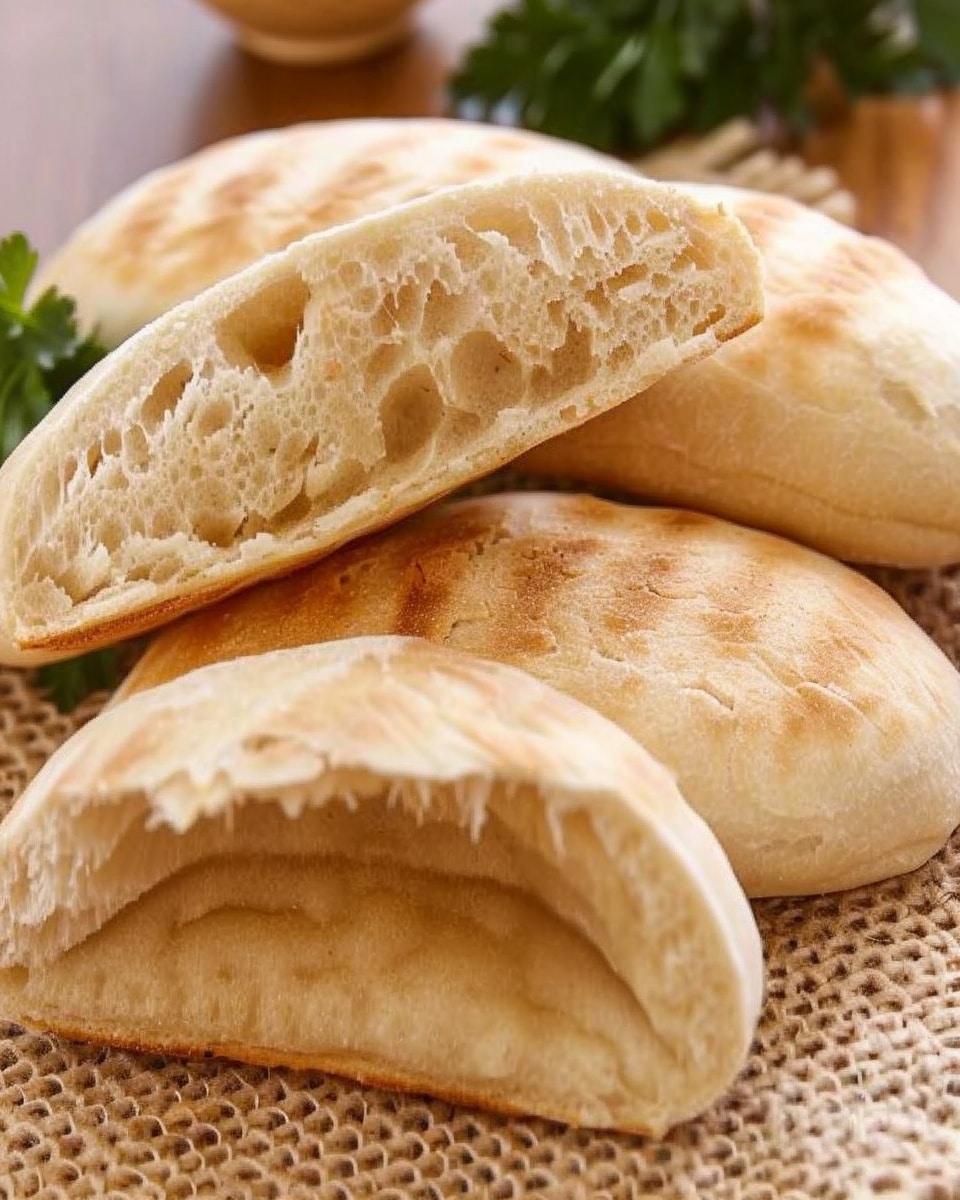
Soft, airy, and perfectly puffed, homemade pita bread is a satisfying addition to any meal. These pita pockets are simple to prepare with basic pantry ingredients and create a delightful hollow center ideal for stuffing with your favorite fillings. Whether served warm with dips or used as a sandwich base, this recipe brings fresh bakery-style bread right into your kitchen.
Why You’ll Love This Recipe
This pita pocket recipe is approachable and reliable, even for beginners. It uses minimal ingredients yet delivers impressive results with a soft texture and signature pocket. The dough is easy to handle, requiring only a short resting time, and the cooking process is quick. You can bake or cook them on a skillet, making it flexible depending on your kitchen setup. Homemade pita also tastes fresher and more flavorful than store-bought versions, with no unnecessary additives. Plus, it pairs beautifully with a wide range of dishes, from grilled meats to vegetable fillings.
Ingredients
(Tip: You’ll find the full list of ingredients and measurements in the recipe card below.)
2 cups all-purpose flour
1 tsp instant yeast
1 tsp sugar
1/2 tsp salt
3/4 cup warm water
1 tbsp oil
Directions
Start by activating the yeast. In a mixing bowl, combine the warm water, sugar, and instant yeast. Let it sit for about 5 minutes until it becomes slightly frothy. This step ensures the yeast is active and ready to help the dough rise.
In a separate large bowl, mix the flour and salt. Gradually pour in the yeast mixture along with the oil. Stir everything together until a soft dough begins to form.
Transfer the dough onto a lightly floured surface and knead for about 8 to 10 minutes. The dough should become smooth, elastic, and slightly tacky but not sticky. If needed, sprinkle a little more flour while kneading.
Place the dough in a lightly oiled bowl, cover it with a clean cloth, and let it rest in a warm place for about 1 hour or until it doubles in size.
Once risen, punch down the dough gently to release air. Divide it into equal portions, about 6 to 8 pieces depending on your preferred size. Roll each piece into a ball, then flatten it into a round disc about 1/4 inch thick.
Preheat your oven to a high temperature, around 220°C (425°F), or heat a skillet over medium-high heat. If baking, place the discs on a lined baking tray and bake for 5 to 7 minutes until they puff up. If using a skillet, cook each disc for about 2 minutes on each side until puffed and lightly browned.
Remove from heat and cover with a clean towel to keep them soft.
Servings and timing
This recipe makes about 6 to 8 pita pockets. Preparation time is approximately 15 minutes, with an additional 1 hour for resting the dough. Cooking time takes around 10 minutes total, depending on your method. Overall, you can have fresh pita ready in about 1 hour and 30 minutes.
Variations
You can experiment with different types of flour, such as whole wheat flour, for a nuttier flavor and added fiber. Mixing half all-purpose and half whole wheat flour works well without making the bread too dense.
For a softer texture, you can add a tablespoon of yogurt to the dough. If you prefer a richer flavor, substitute olive oil for regular oil.
You can also flavor the dough with herbs like dried oregano or garlic powder for a more aromatic result. These additions work especially well if you plan to serve the pita with savory fillings.
Storage/Reheating
Store leftover pita pockets in an airtight container at room temperature for up to 2 days. For longer storage, keep them in the refrigerator for up to 5 days.
To freeze, stack the pita with parchment paper between each piece and place them in a freezer-safe bag. They can be frozen for up to 2 months.
When reheating, warm them in a skillet for a minute on each side or wrap them in foil and heat in the oven. You can also microwave them briefly, covered with a damp cloth to prevent drying out.
FAQs
Can I make the dough ahead of time?
Yes, you can prepare the dough and refrigerate it overnight. Let it come to room temperature before shaping and cooking.
Why didn’t my pita puff up?
This usually happens if the oven or pan is not hot enough. High heat is essential for creating the steam that forms the pocket.
Can I use active dry yeast instead of instant yeast?
Yes, but you will need to activate it in warm water for a few extra minutes before mixing.
Is it possible to make this without oil?
Yes, but the texture may be slightly less soft. Oil helps improve elasticity and softness.
Can I bake these instead of frying?
Yes, baking is a common method and works very well for achieving puffed pita.
How do I get perfectly round shapes?
Use a rolling pin and rotate the dough as you roll to maintain an even circular shape.
Can I use gluten-free flour?
Gluten-free flour can be used, but the texture and puffing may differ due to the lack of gluten.
What fillings go well with pita pockets?
They pair well with grilled chicken, vegetables, hummus, or fresh salads.
How thin should I roll the dough?
About 1/4 inch thickness is ideal to ensure proper puffing without tearing.
Can I reheat pita more than once?
It is best to reheat only what you need, as repeated reheating can make the bread dry.
Conclusion
Making pita bread at home is both simple and rewarding. With just a few ingredients and basic steps, you can create soft, delicious pockets that elevate any meal. Whether baked or cooked on a skillet, these pita breads deliver a fresh taste and satisfying texture that store-bought versions rarely match. Once you try this recipe, it may become a staple in your kitchen.
Soft, airy homemade pita pockets made with simple pantry ingredients and cooked until perfectly puffed, ideal for stuffing, dipping, or serving with meals.
Ingredients
2 cups all-purpose flour
1 tsp instant yeast
1 tsp sugar
1/2 tsp salt
3/4 cup warm water
1 tbsp oil
Instructions
In a mixing bowl, combine warm water, sugar, and instant yeast. Let sit for about 5 minutes until slightly frothy.
In a large bowl, mix the flour and salt.
Gradually add the yeast mixture and oil to the flour mixture, stirring until a soft dough forms.
Transfer the dough to a lightly floured surface and knead for 8 to 10 minutes until smooth, elastic, and slightly tacky.
Place the dough in a lightly oiled bowl, cover with a clean cloth, and let rest in a warm place for about 1 hour, or until doubled in size.
Gently punch down the dough and divide it into 6 to 8 equal pieces.
Roll each piece into a ball, then flatten into a round disc about 1/4 inch thick.
Preheat the oven to 220°C / 425°F or heat a skillet over medium-high heat.
For baking, place the discs on a lined baking tray and bake for 5 to 7 minutes until puffed. For skillet cooking, cook each disc for about 2 minutes per side until puffed and lightly browned.
Remove from heat and cover with a clean towel to keep the pita pockets soft.
Notes
High heat is essential for creating steam and helping the pita puff into pockets.
Roll the dough evenly to about 1/4 inch thick for the best puff.
You can use half whole wheat flour for a nuttier flavor and added fiber.
Add 1 tablespoon yogurt for a softer texture, if desired.
Store leftovers in an airtight container at room temperature for up to 2 days or refrigerate for up to 5 days.
Freeze pita pockets with parchment paper between each piece for up to 2 months.